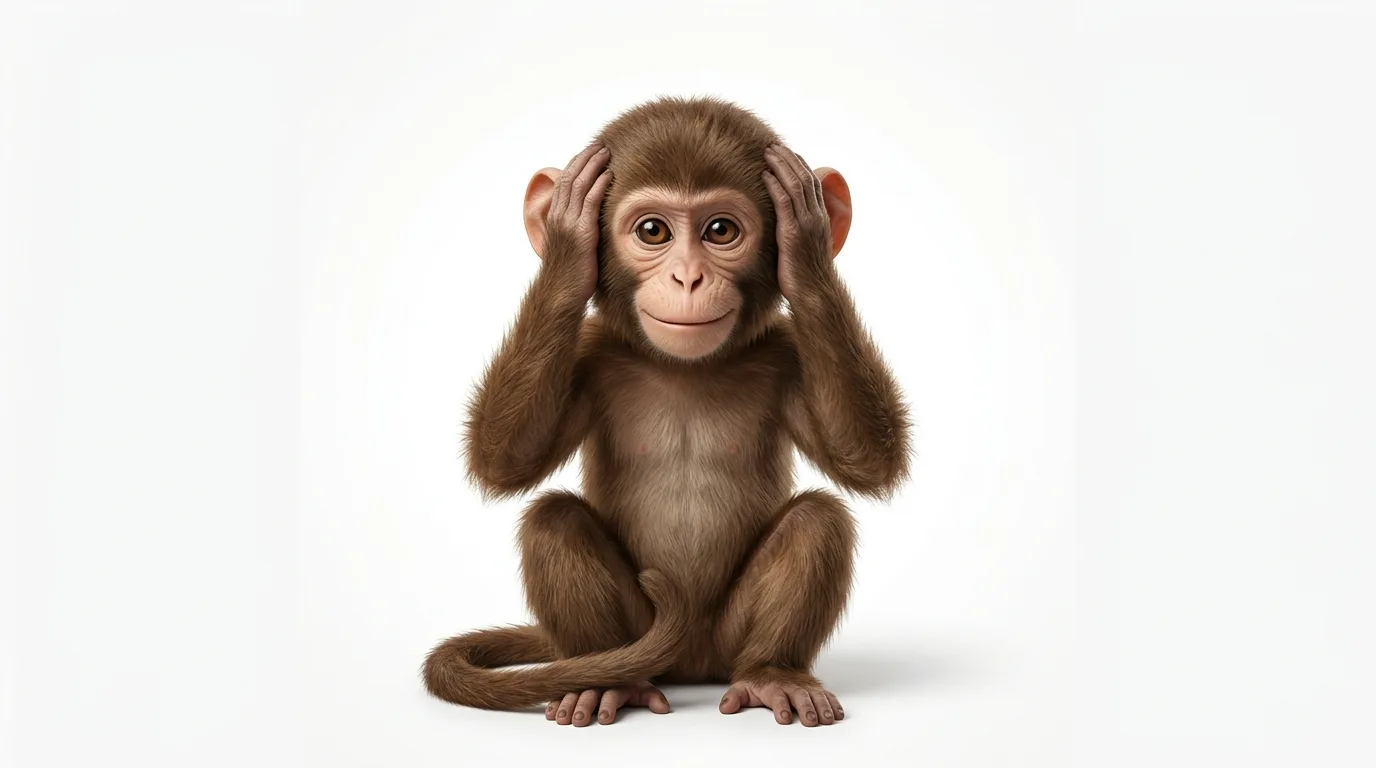
A single monkey emoji can mean “I’m being silly,” “I’m embarrassed,” “I cannot believe this,” or even “I’m keeping that secret.”
If you searched for monkey emoji, you may be trying to understand 🐒, 🐵, 🙈, 🙉, or 🙊 in a text, comment, meme, or flirtatious conversation. They are not interchangeable. Unicode treats them as separate emoji, while everyday users often give them playful meanings based on context.
Monkey emojis are tiny reactions with surprisingly different personalities.
What Does the Monkey Emoji Mean?
There are five main monkey emojis people commonly mean when they search for this term.
🐒 Monkey usually represents the animal itself, but it can also add a playful or mischievous tone.
🐵 Monkey Face is often used for a cute, playful, or silly reaction.
🙈 See-No-Evil Monkey commonly expresses embarrassment, awkwardness, disbelief, or “I cannot look!”
🙉 Hear-No-Evil Monkey can mean “I don’t want to hear this,” surprise, disbelief, or avoiding unwanted information.
🙊 Speak-No-Evil Monkey is often used for secrets, “oops, I said too much,” or “I won’t tell.”
| Emoji | Common meaning | Possible context | Example |
| 🐒 | Monkey, playful behavior | Animal or joking conversation | Look at that monkey 🐒 |
| 🐵 | Cute or silly mood | Playful texting | You’re so silly 🐵 |
| 🙈 | Embarrassment or awkwardness | Crush, mistake, funny moment | I actually sent it 🙈 |
| 🙉 | Not wanting to hear | Gossip, spoilers, shocking news | Don’t tell me 🙉 |
| 🙊 | Silence or secret | Confession, gossip, “oops” | I won’t tell anyone 🙊 |
Monkey Emoji Reactions
In texting, these emojis often work like quick facial reactions.
🙈 can react to a compliment, embarrassing photo, romantic confession, or awkward mistake.
🙉 fits a message like “Stop, I don’t want to know!” especially when someone is sharing gossip or spoilers.
🙊 works after accidentally revealing something or when you want to playfully promise to keep quiet.
The meaning is never guaranteed by the emoji alone. The words around it, your relationship with the sender, and the situation can change the interpretation.
Monkey Emoji in Texting
Monkey emojis are especially useful when plain words feel too serious.
For example:
“I forgot your birthday 🙈” sounds embarrassing rather than completely formal.
“Okay, I heard nothing 🙉” can turn a serious-sounding sentence into a playful reaction.
“I know something you don’t 🙊” can suggest that the sender is teasing or keeping a secret.
For funny texting, 🐵 and 🐒 can also signal that the sender is joking rather than speaking seriously.
Funny Monkey Emoji Memes & Reactions
Monkey emojis work well with meme-style situations because their expressions already look exaggerated.
When your crush says “I like you”: 🙈
When your friend starts revealing private gossip: 🙉
When you accidentally expose your own secret: 🙊
When everyone is being chaotic in the group chat: 🐒
When you know you should behave but choose chaos: 🐵
These are contextual uses, not fixed dictionary definitions. EmojiTerra and Emojiall also document playful combinations, memes, and chat examples around the monkey family.
Monkey Emoji in Flirting
🙈 is probably the easiest monkey emoji to use in a shy or playful romantic conversation, but it does not automatically mean “I like you.”
For example:
“You actually look really good today 🙈”
“Stop making me blush 🙈”
“Maybe I was waiting for you to text me 🙈”
Here, the surrounding words create the flirtatious meaning.
🙊 can work when someone is teasingly hiding a romantic thought:
“I was going to tell you something… 🙊”
🐵 can make playful flirting feel less serious:
“You’re trouble 🐵”
A good rule is to read the whole conversation instead of decoding the emoji by itself.
What Does It Mean When Someone Sends 🙈, 🙉, or 🙊?
If someone sends 🙈 after your compliment, they may be showing playful embarrassment or shyness.
If they send 🙉, they may be jokingly saying they do not want to hear something, particularly gossip, spoilers, or an uncomfortable comment.
If they send 🙊, they may be signaling secrecy, silence, or “oops, I shouldn’t have said that.”
The safest interpretation comes from the complete message and your existing relationship with that person.
How Should You Reply to a Monkey Emoji?
Your reply can match the tone of the original message.
If they send 🙈:
“Why are you hiding? 😂”
If they send 🙉:
“Okay okay, I won’t tell you 😄”
If they send 🙊:
“Your secret is safe with me.”
If they send 🐵:
“Someone is feeling playful today!”
If they send 🐒:
“Why are you acting wild? 😂”
For flirting, a light reply can work better than immediately assuming romantic interest:
“Are you shy now? 🙈”
“Okay, mysterious person 🙊”
“Someone’s being cute today 🐵”
Best Monkey Emoji Combos: Copy & Paste
Romantic
- 🙈🙈 — shy reaction to a sweet message
- 🙊🙈 — hiding what you really want to say
- 🐵🙈 — playful romantic teasing
Cute
- 🐵🙈 — silly and shy mood
- 🙈🙊 — cute embarrassment
- 🐒🐵 — playful monkey mood
Flirty
- 🙈🙊 — teasingly holding something back
- 🐵🙈 — playful shyness
- 🙊🙈 — “I probably shouldn’t say this”
Missing Someone
- 🙈🙊 — holding back feelings
- 🐵🙈 — playful emotional message
- 🙊🙊 — keeping feelings private
Good Night
- 🙈🙊 — shy good-night mood
- 🐵🙈 — playful sign-off
- 🐒🙈 — silly bedtime reaction
Monkey Emoji on WhatsApp, Instagram & TikTok
On WhatsApp, these emojis commonly appear in personal chats, jokes, reactions, secrets, and awkward conversations.
On Instagram, they can appear in comments, captions, Stories, and replies. 🙈 is particularly useful for reacting to embarrassing or cute moments.
On TikTok, monkey emojis can function as quick reactions to funny, awkward, surprising, or chaotic content. Their interpretation can depend heavily on the community and surrounding comments.
Do and Don’t
Do:
- Match the emoji to your message.
- Consider your relationship with the person.
- Use combinations naturally.
- Check the surrounding context.
Don’t:
- Assume 🙈 always means flirting.
- Treat 🐒 as an insult or nickname without clear context.
- Fill every message with emojis.
- Assume an emoji has exactly one meaning.
A Context You Should Not Ignore
Monkey emojis are completely normal when discussing animals, jokes, memes, or everyday reactions. However, context matters when they are directed at a person.
Emojipedia notes that monkey and monkey-face emojis have been used as racist abuse against Black people. The emoji itself is not automatically racist, but using monkey imagery to demean someone because of race is harmful and racist.
That distinction is important when interpreting comments on public social-media posts.
Why Monkey Emojis Look Different on Devices
The same emoji can look different on an iPhone, Android phone, Windows PC, Mac, or inside a particular app.
That happens because different platforms create their own emoji artwork while using the same underlying Unicode character. A different visual design does not automatically create a different meaning.
For example, one platform may make 🐒 look more realistic while another gives it a more cartoon-like appearance.
Frequently Asked Questions
1. What is the most popular monkey emoji?
There is no universal current ranking for monkey emojis across every platform. 🐒, 🐵, 🙈, 🙉, and 🙊 are used for different purposes, so popularity can vary by context.
2. What does 🙈 mean when someone sends it?
🙈 commonly suggests embarrassment, shyness, awkwardness, or “I can’t look.” In a romantic chat it can feel flirty, but context determines the intended tone.
3. Why do emojis look different on iPhone vs Android?
Apple, Google, Microsoft, and other platforms create different emoji designs. The underlying Unicode character remains the same even when the artwork changes.
4. Are monkey emojis used differently in other countries?
Yes, interpretations can vary across communities and cultures. The Three Wise Monkeys have historical cultural associations, while modern messaging often uses them in casual and playful ways.
Monkey emojis are useful because they can make texting feel playful, shy, funny, or secretive without adding many words.
Use the surrounding conversation as your guide, especially when flirting or interpreting someone’s reaction.
When the context is clear, even one little monkey can say a lot.
Conclusion
Monkey emojis can add humor, shyness, surprise, or playful energy to everyday conversations.
Their meaning depends on the message, relationship, and situation, so context always matters.
Whether you’re texting a friend, flirting with someone, or reacting to a funny moment, use them naturally and let the conversation set the tone.

he PressioHub team is passionate about emojis and the way people use them to express feelings, reactions, ideas, and personality in digital conversations. We create simple, easy-to-understand content about emoji meanings, symbols, combinations, and everyday emoji usage. Whether you are wondering what an emoji means, looking for the right emoji for a message, or exploring new ways to express yourself online, PressioHub is here to help. Our goal is to make emoji-related information clear, useful, and fun. We research meanings and common usage so readers can choose the right emoji with confidence. At PressioHub, we believe that sometimes one emoji can say what words cannot. 😊