🧐 looks like a tiny detective, but what does it actually mean in a text?
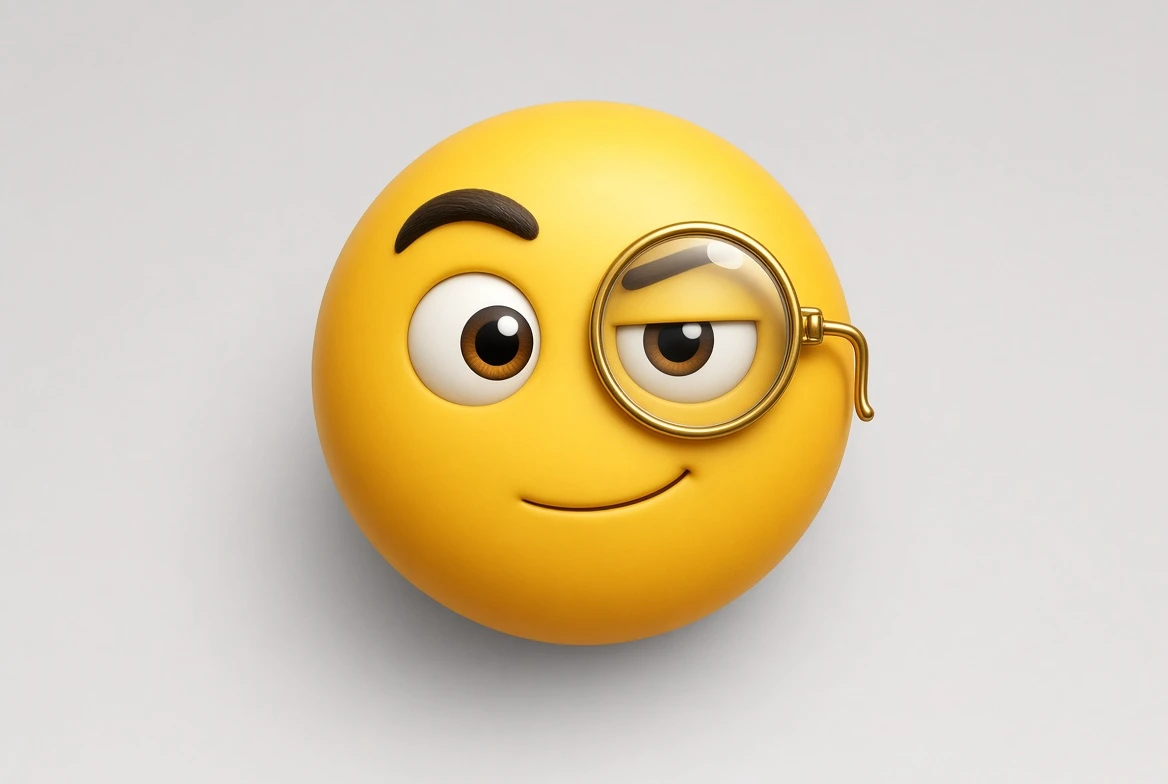
The emoji with monocle 🧐, officially called Face with Monocle, is commonly used for curiosity, close examination, questioning, skepticism, or playful investigation. Unicode identifies it as U+1F9D0, while Emojipedia notes that it can suggest pondering, questioning, skeptical observation, or an ironic “smarty-pants” attitude.
In texting, 🧐 can mean “Hmm, let me look at that,” “Are you sure?” or “That sounds suspicious.” It can also be funny when someone pretends to investigate a friend’s story.
🧐 is basically the emoji version of saying, “Interesting… let me investigate.”
What Does the Emoji With Monocle 🧐 Mean?
The main meaning of 🧐 is careful observation or questioning. It often appears when someone wants to examine a statement, situation, photo, or explanation more closely.
For example, “You finished the whole project in ten minutes? 🧐” sounds skeptical and playful rather than genuinely angry.
In a funny conversation, 🧐 can also create a mock-serious personality. “Very interesting 🧐” may suggest that the sender is pretending to be an expert or detective.
| Emoji | Common reaction | Possible interpretation | Example |
|---|---|---|---|
| 🧐 | Scrutiny | “Let me investigate” | That story sounds interesting 🧐 |
| 🤨 | Doubt | “Really?” | You expect me to believe that? 🤨 |
| 🤔 | Thinking | “Let me consider this” | I need to think 🤔 |
| 😏 | Smirking | Teasing or confidence | You know what I mean 😏 |
| 😎 | Cool confidence | Relaxed attitude | We handled it 😎 |
The key difference is that 🧐 often adds a performative investigation to the reaction. It can feel more theatrical than 🤔 and less directly suspicious than 🤨.
🧐 Meaning in Texting
In texting, 🧐 is especially useful when the words alone do not quite express your reaction.
“You said you were sleeping at 9? 🧐” can jokingly question someone’s story.
“Hmm, interesting 🧐” can mean that you noticed something unusual.
“Let me check that 🧐” gives the message a curious, investigative tone.
It does not automatically mean anger or accusation. The surrounding words and relationship between the people matter.
🧐 Funny Meaning and Meme Use
One of the funniest uses of 🧐 is pretending to investigate something that obviously does not require serious investigation.
Examples include:
- “She said she doesn’t like him 🧐”
- “Interesting excuse 🧐”
- “I will be investigating this immediately 🧐”
- “The math is not mathing 🧐”
- “Something is suspicious here 🧐”
This is where the monocle becomes part of the joke. The sender is acting like a serious detective, professor, or overly sophisticated investigator.
Some online users also use 🧐 ironically to mock an overly serious analysis. That makes it useful in comments, memes, group chats, and reaction posts.
🧐 Meaning From a Girl or Guy in Texting
If someone sends 🧐 after your message, don’t assume it has a special meaning based on whether the sender is a girl or guy.
It could mean:
- “I’m questioning that.”
- “Tell me more.”
- “I’m watching you.”
- “That sounds suspicious.”
- “Interesting…”
- “I’m jokingly investigating.”
For example:
You: “I definitely didn’t eat the last slice.”
Them: “🧐”
Here, the emoji probably adds playful suspicion.
The safest interpretation comes from the complete conversation, not the sender’s gender.
🧐 Meaning When Flirting
🧐 is not inherently a romantic emoji, but it can become flirty when used with playful wording.
For example:
“So you noticed me? 🧐”
This can sound teasing and invite the other person to explain themselves.
Another example:
“You keep looking at my stories 🧐”
Depending on the relationship, that can feel playful or flirtatious.
You can also combine 🧐 with 😏 when the conversation already has a teasing tone:
“Oh, so that’s what you meant 🧐😏”
The important point is context. Sending 🧐 by itself does not automatically communicate attraction.
How to Reply to 🧐
Your best reply depends on what the sender seems to mean.
If they’re joking:
“Why are you investigating me? 😂”
If they’re suspicious:
“I can explain 🧐”
If they’re teasing:
“You noticed that, huh? 😏”
If they’re flirting:
“Curious about me? 👀”
If they’re genuinely questioning you:
“Ask me anything.”
If you want to tease them back:
“Detective mode activated again? 🧐”
A short reply usually works better than overexplaining the emoji.
🧐 Emoji Combos: Copy and Paste
Romantic
- 🧐❤️ — Playful curiosity with affection
- 🧐😏 — Curious and teasing
- 🧐🥰 — Playful interest with warmth
Funny
- 🧐😂 — Pretending to investigate something ridiculous
- 🧐🤣 — Extra exaggerated suspicion
- 🧐😅 — Awkward investigation or questioning
Flirty
- 🧐😏 — “I’m noticing what you’re doing”
- 🧐❤️ — Curious interest with affection
- 🧐🥰 — Playful romantic curiosity
Missing Someone
- 🧐❤️ — Thinking about someone with playful curiosity
- 🧐🥺 — Curious but emotionally softer
Good Night
- 🧐😏 — Teasing before saying good night
- 🧐❤️ — Playful affection before bed
🧐 Reactions You Can Copy
Sometimes you don’t need a long reply. A single 🧐 can answer a message when you want to show curiosity or suspicion.
Try these:
“Really? 🧐”
“Interesting… 🧐”
“Explain yourself 🧐”
“I’m listening 🧐”
“Let me investigate 🧐”
“That sounds suspicious 🧐”
These work particularly well in casual chats because the emoji supplies some of the emotional tone that plain text can lack.
Why Does 🧐 Look Different on iPhone and Android?
The Unicode character is the same, but Apple, Google, Microsoft, and other platforms create their own emoji artwork.
As a result, the monocle, facial expression, colors, and small visual details can look different on iPhone, Android, Windows, Mac, or inside different apps.
A different design does not automatically mean a different meaning. The underlying character remains U+1F9D0, Face with Monocle.
FAQs
What does 🧐 mean in texting?
It usually suggests curiosity, scrutiny, questioning, or playful suspicion. Depending on the message, it can also create a funny “detective” or mock-intellectual tone.
Is 🧐 a flirting emoji?
Not by itself. It can become flirty when used with teasing language or romantic context, but the emoji alone does not necessarily indicate attraction.
What does 🧐 mean as a reply?
As a reply, it can mean “Really?”, “Tell me more,” “I’m suspicious,” or “Let me examine that.” The surrounding conversation determines which interpretation fits.
Is 🧐 the same as 🤔?
No. 🤔 is primarily associated with thinking or considering something, while 🧐 more often suggests examining, questioning, or scrutinizing something, sometimes with an ironic tone.
The emoji with monocle 🧐 works best when you want to sound curious, skeptical, playful, or mock-serious. Its meaning changes with context, so pair it with words when your intention really matters.
Whether you’re investigating a suspicious text, teasing someone, reacting to a funny meme, or adding a little flirtation, 🧐 can say a lot with one tiny expression.
Conclusion
The emoji with monocle 🧐 is a simple way to show curiosity, questioning, playful suspicion, or mock seriousness. Its exact tone depends on the words, situation, and relationship behind the message.
Use 🧐 naturally in texts, reactions, memes, and playful conversations, especially when you want to make an ordinary question feel a little more humorous or dramatic.

he PressioHub team is passionate about emojis and the way people use them to express feelings, reactions, ideas, and personality in digital conversations. We create simple, easy-to-understand content about emoji meanings, symbols, combinations, and everyday emoji usage. Whether you are wondering what an emoji means, looking for the right emoji for a message, or exploring new ways to express yourself online, PressioHub is here to help. Our goal is to make emoji-related information clear, useful, and fun. We research meanings and common usage so readers can choose the right emoji with confidence. At PressioHub, we believe that sometimes one emoji can say what words cannot.